
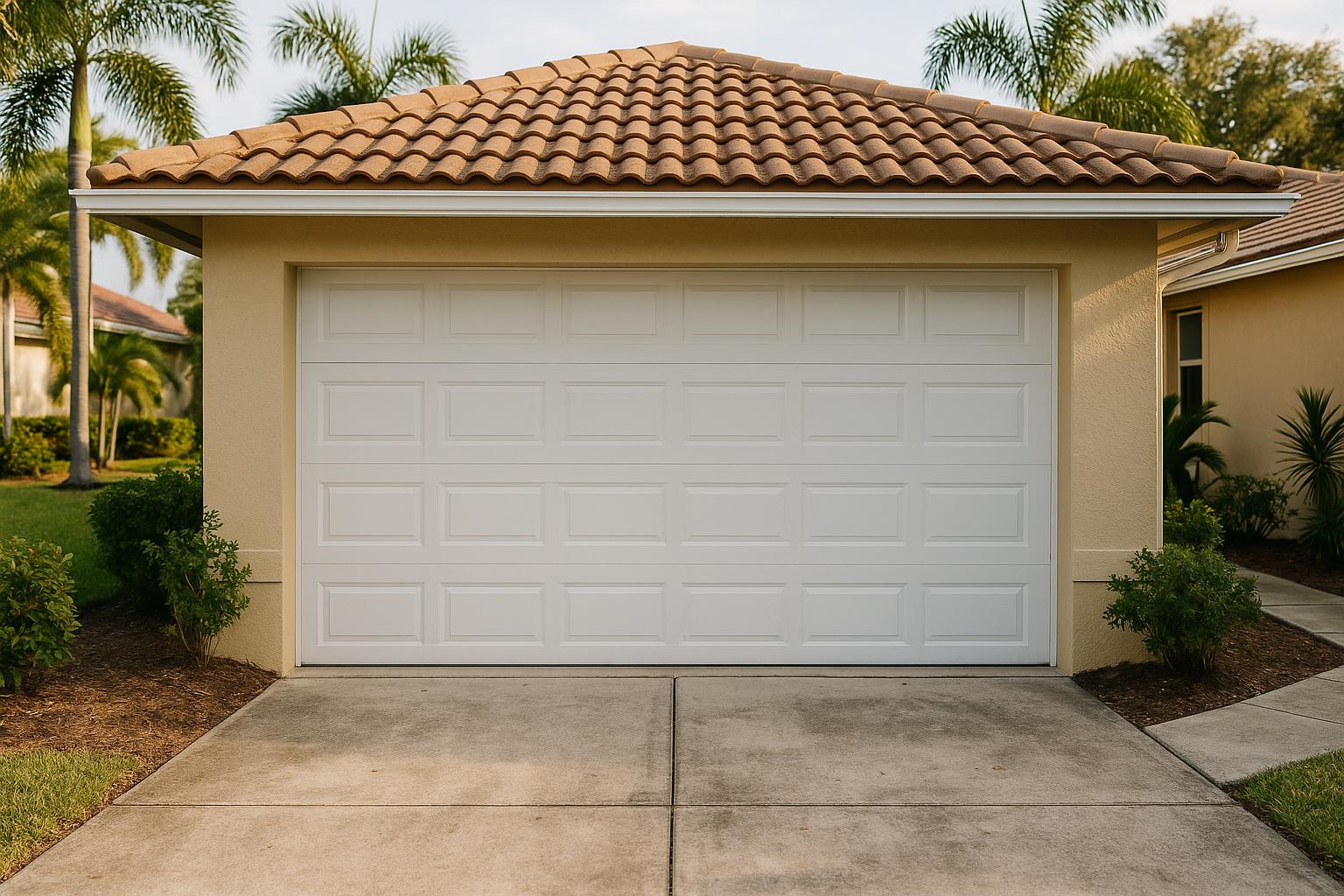
When Your Garage Door Stops Working, Don't Panic
You're running late for work, you press the button on your garage door opener, and nothing happens. Or maybe you pull into the driveway after a long day and your garage door refuses to close all the way. Few home malfunctions are as immediately frustrating as a garage door that won't cooperate.
Before you start imagining the worst-case scenario, take a breath. Many garage door issues have straightforward causes, and some can even be resolved without a service call. In this guide, we'll walk you through the most common reasons a garage door stops opening or closing and help you figure out when it's a quick fix versus when it's time to call a professional in St. Augustine.
Check the Obvious Things First
It might sound too simple, but the first step is ruling out the basics. You'd be surprised how often the solution is something minor that gets overlooked in the moment.
- Dead remote batteries: If your wall-mounted button works but your remote doesn't, swap out the batteries. This is the single most common reason people think their opener has failed.
- Power source: Make sure the opener unit is plugged in. A cord can get bumped loose, especially if you store items near the ceiling of your garage. Also check your circuit breaker panel for a tripped breaker.
- Lock mode: Some garage door openers have a lock or vacation mode that disables the remote. Check your wall console for a lock indicator light.
If none of these apply, it's time to look a little deeper.
The Safety Sensors Might Be the Problem
Modern garage doors are equipped with photoelectric safety sensors near the bottom of the door tracks, usually about six inches off the ground. These sensors send an invisible beam across the opening, and if anything breaks that beam, the door won't close. This is a critical safety feature designed to prevent the door from closing on a person, pet, or object.
Here's what to check:
- Obstructions: Look for anything blocking the sensor path — a trash can, a garden tool, a stray shoe, or even a cobweb. In St. Augustine, we see a lot of spider webs and debris accumulate around garage door sensors, especially during the warmer months.
- Alignment: If the sensors get bumped, they can fall out of alignment. Most sensors have a small LED light — typically green when aligned and amber or red when misaligned. Gently adjust the sensor brackets until both lights are steady.
- Dirty lenses: Wipe the sensor lenses with a soft cloth. Dust, pollen, and moisture can cloud them enough to interrupt the beam.
If your door opens fine but refuses to close, the safety sensors are almost always the first place to look.
Your Garage Door Track Could Be Misaligned or Obstructed
The metal tracks on either side of your garage door guide it as it opens and closes. Over time, these tracks can shift, develop bends, or accumulate dirt and debris that prevent smooth operation.
Visually inspect both tracks from top to bottom. Look for:
- Gaps between the track and the rollers
- Visible bends or dents in the track
- Buildup of grime, rust, or hardened grease
Minor debris can be cleaned out carefully, but if you notice a bent or misaligned track, this is a job for a professional. Attempting to force a door along a damaged track can cause further damage to the door panels, rollers, and opener system.
The Disconnect Switch May Have Been Activated
Every garage door opener has a manual disconnect feature — usually a red cord or handle hanging from the opener rail. This allows you to operate the door manually during a power outage. If someone pulled this cord, the opener will run but the door won't move because the trolley is disengaged from the drive mechanism.
To re-engage it, simply pull the cord back toward the opener unit and then activate the opener with your remote or wall button. The trolley should reconnect automatically as the opener runs.
The Door Might Be Off Its Tracks or Have a Broken Cable
If your garage door looks crooked, hangs at an angle, or makes a loud grinding noise when you try to operate it, the door may have come off its tracks or a lift cable may have broken. These are situations where you should stop trying to operate the door immediately.
A garage door that's off-track or has a snapped cable is under significant tension and can be dangerous to handle without the right tools and training. This is not a DIY repair. Call a qualified garage door technician to assess and fix the problem safely.
Your Opener's Logic Board May Need Attention
Garage door openers rely on a circuit board — sometimes called a logic board — to process signals from your remote, wall button, and safety sensors. Power surges, lightning strikes, and general wear can damage these boards over time. Here in St. Augustine, summer thunderstorms are a frequent culprit.
Signs of a logic board issue include:
- The opener lights flash but the motor doesn't run
- The remote works intermittently or not at all, even with fresh batteries
- The opener behaves erratically — reversing for no reason or starting on its own
If you suspect an electrical issue with your opener, a professional can diagnose whether the board needs to be replaced or if a simpler fix is available.
When to Call a Professional
Some garage door problems are safe and simple to troubleshoot on your own. Replacing remote batteries, clearing sensor obstructions, and re-engaging the disconnect switch are all things most homeowners can handle confidently.
However, you should call a professional if:
- The door is visibly off-track or hanging unevenly
- You hear loud snapping, popping, or grinding noises
- A cable appears frayed or broken
- The opener motor runs but the door doesn't move, even after re-engaging the trolley
- You've tried basic troubleshooting and the problem persists
Garage doors are the largest moving component in most homes, and they operate under high tension. Working on springs, cables, or structural components without proper training can lead to serious injury.
Keep Your Garage Door Reliable Year-Round
The best way to avoid an unexpected breakdown is regular preventive maintenance. Having a technician inspect your garage door system once or twice a year can catch small issues — worn rollers, loose hardware, fraying cables — before they turn into a door that won't budge on a Monday morning.
At St. Augustine Overhead Door Co, we help homeowners and businesses across St. Augustine, Ponte Vedra Beach, St. Augustine Beach, and the surrounding communities keep their garage doors running smoothly. Whether you need a quick repair or a full diagnostic, we show up on time and get the job done right.
If your garage door has stopped cooperating and you've exhausted the basics, give us a call. We'll figure out what's going on and get you back to normal as quickly as possible.